Julia Shirin
Live & In-Person
2 Days of Training
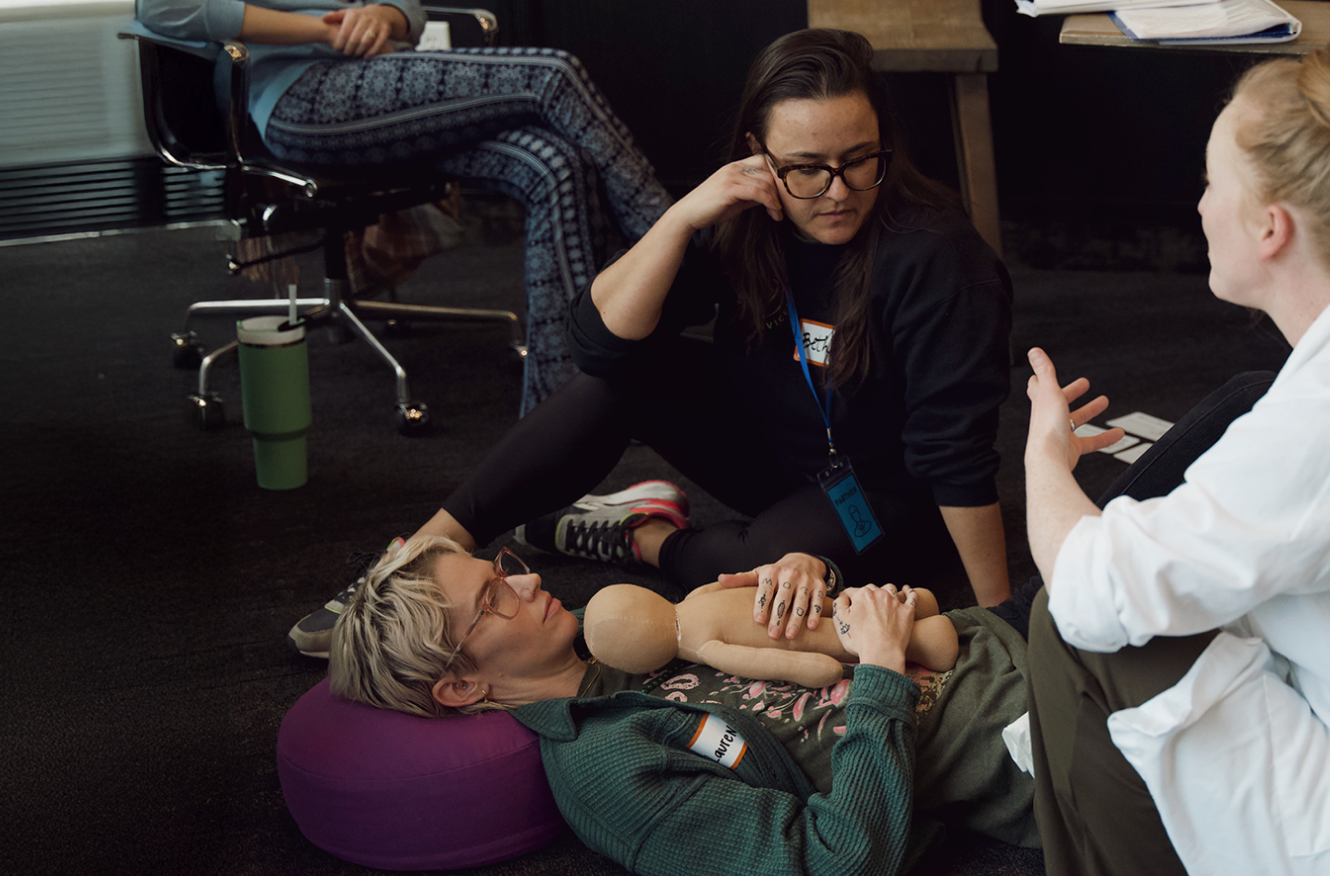
Hands-on Materials
When your voice isn’t heard in the birthing room, crucial support for families can be overlooked, leaving you feeling ineffective and lost. Effective communication and advocacy skills are often missing from basic birth worker trainings, leading to significant challenges for both families and professionals. By attending our advocacy training, you’ll find your voice, learn to navigate the middle road between silence and aggression, and become a stronger advocate equipped with essential tools and hands-on practice to make an impact for the families you support.
Stop Trauma In Its Tracks
Certify as a Perinatal Patient Advocate
Get Comfortable Through Practice
Understand the Hospital. Know the Law.
Feel Like a Leader
"I have done an insane amount of education around trauma informed care - this has added the exact scripts I have been needing."
Kimberly Ryan
“Using these tools led to a more realized compassion for the medical team. I think cognitively I’ve understood the pressure they are under, but today, I FEEL compassion in my HEART in a way that I haven’t felt before.”
Katie Klassen
"Intentional Birth helped me rediscover my power, understand my voice as an advocate, and grounded me in my role in the birthing room! Every doula should have access to this transformative training!"
Evonna Christmon Marshall
*This ticket does not include lodging or travel. Catered lunches will be an optional add-on at checkout!
Register NowWe're Ready to Meet You in Person!
Join Our Waitlist(Tickets available HERE)
(Tickets available HERE)
*If you have more than 4, reach out to support@intentionalbirth.co
Don’t see your region here? Book a call to learn about hosting a training.

We are board-certified patient advocates, seasoned advocate-doulas, and the founders of Intentional Birth and of the Perinatal Patient Advocacy Center.
When we attended our original doula trainings, we were taught not to speak up on our clients' behalf. Don't rock the boat. Doulas don't advocate. Smile and nod at care providers. Then we began attending births, and we realized that our clients were walking away feeling powerless and traumatized (we were, too). We knew there was a bigger role for us to play.
More than a dozen years later, we are transformed (though there is no final destination in this work). We have confidence-building strategies, detailed systems for educating and preparing our clients, and a whole tool bag of incredible communication and advocacy tools. We want to share it all with you!
If you don't see an online option listed above, then keep an eye out! We do regularly offer the training online. Those who wish to certify as perinatal patient advocates will need to be on-screen and fully attentive for the full two days. While there is no substitute for the embodied, interactive practice you'll get at one of our in-person trainings, we recognize that not everyone is able to travel to one of our locations. The online experience has received very positive feedback, and we are confident it will equip you with the knowledge and skillset to be an effective advocate.
We wish every new birth professional could have this grounded training in advocacy. While it definitely helps to have some birth experience under your belt, we have had many new doulas (and non-doulas) take this program with great results. Just be prepared to "welcome the feeling" of not understanding every single term you hear.
We have had many non-doulas participate in this training! Midwives, nurses, childbirth educators, and other professionals who engage with families in the perinatal period will benefit from these advocacy principles and skills. The second day of training consists of role plays that primarily center on the birth room experience: this may not be as applicable for professionals who do not attend births or who do not provide education to families about birth options.
The one exception we make for offering refunds IS if you are called to a birth. We will then offer a prorated refund, or allow you to come to another (full or partial) training. If you need to cancel last-minute for any other reason, we will offer to transfer your ticket to another training but you will not be eligible for a refund.
The core principles and tools we teach in our Advocacy Training are designed to support advocates working with all families and are broadly applicable across diverse identities and experiences. We recognize that racism, bias, and other forms of discrimination contribute to significant disparities in perinatal care—particularly for Black, Indigenous, and other people of color, LGBTQ+ individuals, and immigrant communities. These realities shape the advocacy needs of many clients. At the same time, we want to be transparent about the scope of our training. As white, heterosexual women, we recognize the limits of our lived experience and do not position this training as specialized or identity-specific cultural competency education. For advocates serving communities that experience systemic marginalization, we strongly encourage seeking additional training and mentorship from educators and organizations with specific expertise in those areas. Our commitment is to equip advocates with foundational skills while upholding every person’s right to respectful, individualized, and autonomous care.
Almost! Once you have completed both days of training, you will be invited to complete written and oral testing with our sister organization, the Perinatal Patient Advocacy Center. If you test within three months of your training there are no fees to test or certify. If you pass both tests you will be certified as a PPA for three years. If you do not pass, you will have the opportunity to retest for a fee of $25.
There are a few elements of the Advocacy Training that are USA-centric. But most of the training is about how to humanize a room, support the informed consent process, and navigate challenging conversations. Many participants have traveled from other countries or joined us online, and have benefited from the univeral tools and principles of good advocacy.
No. While we grew our advocacy chops by supporting hundreds of clients who chose to prioritize the physiologic birth process (in over 30 hospitals around the United States), the Advocacy Training is designed to support personalized, respectful care that centers the autonomy of the patient---and their right to fully informed consent or refusal---whatever their choices are.

VIDEO INCLUDED!

Discover how you can be a bridge-builder without ever compromising your client, and how you can feel valued and respected by the team.